Advertising Brief: What It Is, Template and Example
An advertising brief is the one-page document that tells whoever makes the ad what it must achieve, for whom, saying what, and in which format. It is written before the work starts and it is what the finished ad gets judged against.
A good brief is short and specific. It lets a designer, editor or creator make most decisions without asking you.
This guide covers how an advertising brief differs from related documents, what goes in one, a template you can copy, and a filled-in example for a Meta ad.
Advertising brief vs creative brief vs media brief
The three terms get mixed up, and in many teams they mean the same page. Here is the plain split when they are separated.
- Advertising brief. The wider document. It states the business goal, the audience, the budget and where the ad will run.
- Creative brief. The part about the work itself: the one message, the hook, the tone and the format. A creative brief in advertising is what the maker reads.
- Media brief. Aimed at whoever buys and places the ads. It covers platforms, targeting, schedule and spend.
If you are a small team, write one page that covers the first two. Add a media brief only when someone else handles the buying.
What goes in an advertising brief?
Eight things. Leave out anything that does not change what the maker produces.
- Objective. One outcome, such as first purchases from new customers. Not three.
- Audience. Who they are, what they worry about and what they believe now.
- Single-minded message. The one thing the ad must get across, plus the hook that opens it.
- Proof. Why anyone should believe the message: a review, a demo, a number you can back up.
- Offer. The exact deal and the call-to-action.
- Mandatories. Logo, legal lines, claims you must or must not make.
- Format and placements. Static, video or carousel, length, and where it runs, such as Instagram Reels or Facebook Feed.
- Deadline and budget. Due date, number of versions, and what the production budget covers.
Add references too. Two or three ads that show the structure, pacing or tone you want will save a round of revisions.
Advertising brief template
Copy this and fill it in. Keep each answer to a line or two.
ADVERTISING BRIEF: [working name]
Date: ________   Owner: ________   Due: ________

1. OBJECTIVE
What this ad must achieve (one outcome):
How we will measure it:

2. AUDIENCE
Who this is for:
What they worry about, in their words:
What they believe now:
What we want them to believe after:

3. THE ONE MESSAGE
The single thing the ad must say:
Hook (first line or first 2 seconds):

4. PROOF
Why we can say it (review, demo, data we hold):

5. OFFER
Exact offer:
Call-to-action button:
Landing page:

6. MANDATORIES
Must include (logo, legal lines, product shots):
Must not say or show:

7. FORMAT AND PLACEMENTS
Format: static / video / carousel
Length and aspect ratio:
Placements:
Person on camera: Y / N

8. REFERENCES
2-3 ads to look at, and what to take from each:

9. DEADLINE AND BUDGET
First draft due:
Final due:
Number of versions:
Budget for production:
Advertising brief example
Here is a filled-in brief for a made-up brand. Northwind Coffee is fictional, and so is every detail below.
ADVERTISING BRIEF: Northwind Coffee, "Sunday Reset" UGC
Date: 24 Nov   Owner: Maya (marketing)   Due: 8 Dec

1. OBJECTIVE
First subscription orders from new customers.
Measure: cost per first order against our current best ad.

2. AUDIENCE
Home coffee drinkers who buy supermarket beans.
Worry: paying for good beans and wasting them on a bad grind.
Believe now: "specialty coffee is fussy."
Want them to believe: "this is easy and tastes better."

3. THE ONE MESSAGE
Fresh-roasted beans, ground for your machine, no fuss.
Hook: "I stopped buying supermarket coffee and here is what changed."

4. PROOF
Roast date printed on every bag. Customer review quotes
we hold permission for. Real unboxing shown on camera.

5. OFFER
First bag half price with a subscription, skip or cancel anytime.
CTA: Shop now. Landing page: /first-bag

6. MANDATORIES
Logo end card. Offer terms in the caption.
Do not claim health benefits. Do not mention competitors.

7. FORMAT AND PLACEMENTS
Vertical video, 20-30 seconds, 9:16.
Instagram Reels and Facebook Reels. Creator on camera, phone footage.

8. REFERENCES
Two competitor subscription ads (links attached).
Take: the open on the kitchen counter, and the unboxing at the end.

9. DEADLINE AND BUDGET
Draft 1 Dec, final 8 Dec. Three hook variants of one video.
Budget: one creator fee plus product.
Notice what is missing: a second message, a list of nice-to-haves and a paragraph of brand history. The brief picks one message and holds to it.
Common mistakes in advertising briefs
- Too many messages. "Fresh, cheap, ethical and fast" is four ads. Pick one and test the others in separate briefs.
- No proof. A claim with nothing behind it makes the maker invent support, or leave it out.
- No reference ads. Words like "authentic" and "premium" mean different things to different people. An example removes the guessing.
- A vague objective. "Raise awareness" gives nobody a way to say the ad worked.
- Claims you cannot back up. If legal or the product team would object, put it under Do not say.
How do you ground a brief in what competitors run?
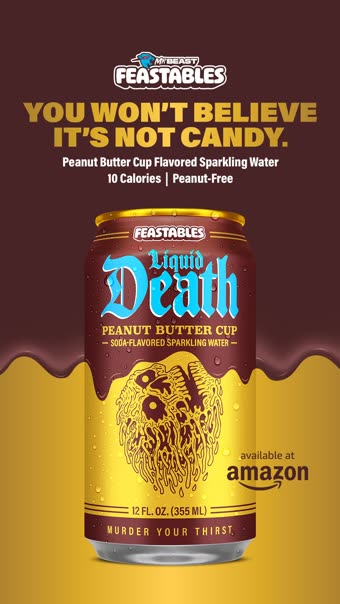
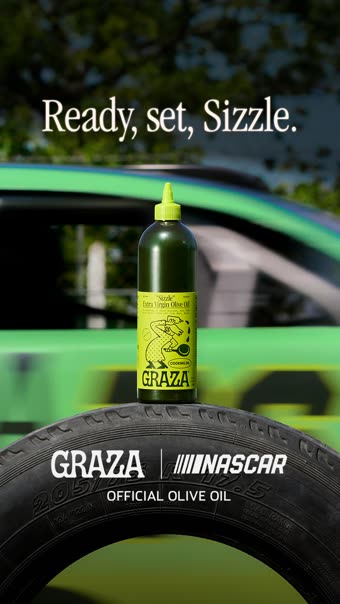
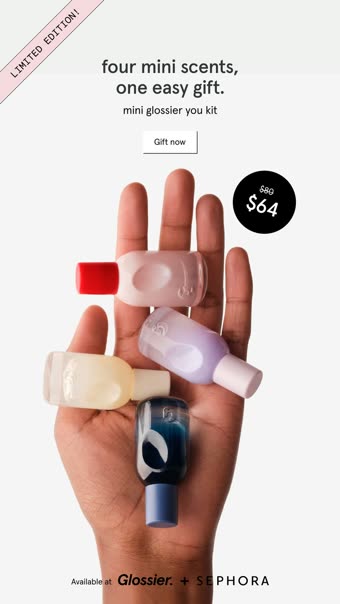
The strongest references are ads your competitors have kept running. Look at what they say first, what proof they use and what format they have settled on, then decide what is true and different for your brand.
We cover the full method in how to write a creative brief from competitor ads. Long-running is only a clue, not proof that an ad works, so read how to tell if a competitor ad is working before you lean on it.
How Seercraft writes briefs from real ads
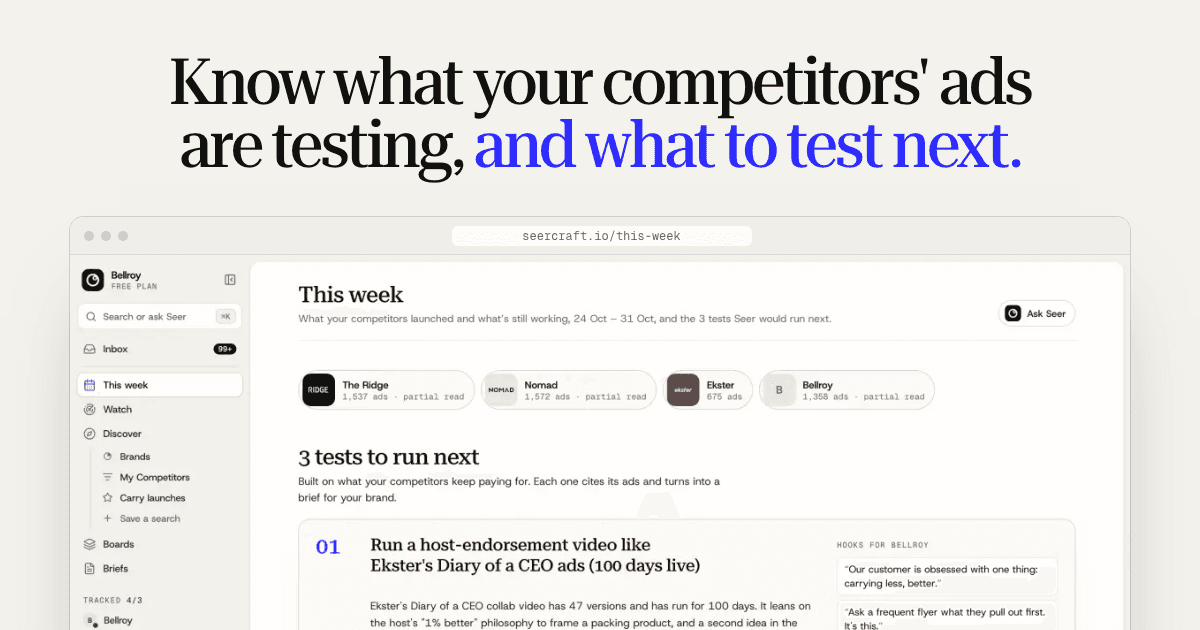
Seercraft tracks the Meta ads of brands you follow and keeps history after ads stop. You can start a brief from a test on the This week page or from a saved board of ads.
The creative briefs feature fills in the reference ads, the concept, hooks in your brand's voice and the evidence for each section. You edit it, then share a link with your team or creators. You still choose the angle and check every claim.
Add a competitor and start your free trial to build your next brief from real ads. Every subscription includes a 7-day free trial; see our pricing page for current plans.