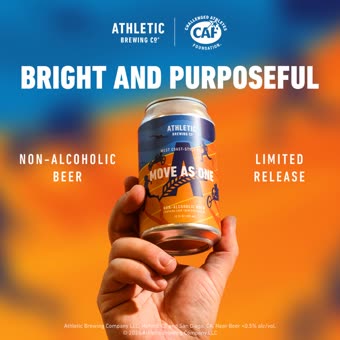
Friendsgiving Creator Ads: Why Brands Let a Friend Host
"This is my first time hosting Friendsgiving, and I wanted every person who walks in to feel like their seat was saved just for them."
That's a Home Depot ad. A creator, wild.hearts.home, wrote it, and it runs from the creator's page.
We read the Friendsgiving ads running on Meta in the US on 17 November 2026. The Home Depot shows up three times in the top results, each time through a different creator, and never under its own name. It isn't the only brand doing this. The short answer: for a holiday about friends, brands let a friend do the talking.
What did we count?
We used the Meta Ad Library's exact-phrase search, filtered to active ads in the US, sorted by impressions. We read the top results for each phrase and removed duplicate versions of the same ad.
In the library, a creator partnership ad shows both names: the creator "with" the brand. We counted those.
| Search | Distinct creatives | Creator partnership ads |
|---|---|---|
| "Friendsgiving" | 182 | 32 (about 1 in 6) |
| "Thanksgiving" | 202 | 22 (about 1 in 9) |
The Friendsgiving partnership ads come from more than 20 brands. Some brands appear more than once:
- The Home Depot: three creators (wild.hearts.home, Weekly Home Check and Jasmine Monroe), and no Friendsgiving ad under its own name in the top results.
- McCormick: two creators, each with a recipe.
- Life is Good: two creators.
- IKEA, H&M, TRUFF, Culturelle, Harry & David, 1-800-Flowers.com and Netflix: one creator each.
What do the creator ads sound like?
They sound like a person telling you about their dinner.
wild.hearts.home with The Home Depot writes as a first-time host, and the table is the product.

Weekly Home Check with The Home Depot starts from a detail every guest knows: "The mac and cheese was already handled, so this year I'm upgrading the table."
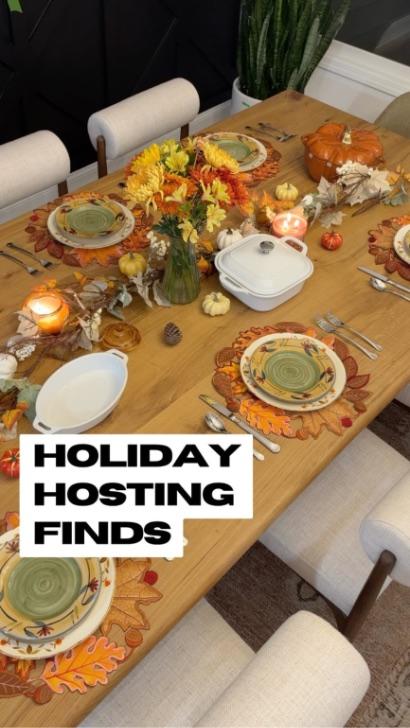
Yianna Bouikidis with TRUFF sells a hot sauce gift set as a guest's gift: "Everyone knows when you're Greek, you never show up empty-handed! So for Friendsgiving, I brought TRUFF's three-piece hot sauce gift set."

Brands also reuse creators. Reece Weaver runs two ads that open with the same line, "A little less time in the kitchen", one with Harry & David and one with 1-800-Flowers.com.
Why does this work for Friendsgiving?
A brand saying "make your Friendsgiving special" sounds like an ad. A friend saying "this is my first time hosting" sounds like an invitation.
The creator ads also carry details a brand would struggle to say in its own voice: being Greek and never arriving empty-handed, the mac and cheese already being handled, a seat saved for every guest. Those details make the product feel like part of a real dinner rather than a catalogue.
The gap with Thanksgiving, about 1 in 6 against about 1 in 9, fits that idea. Fewer of the top Thanksgiving ads hand the voice to a creator.
What can your brand take from this?
- Ask whose voice the moment belongs to. Friendsgiving belongs to friends. Back-to-school belongs to parents. If the moment is personal, a person may say it better than your brand.
- Use more than one creator. The Home Depot used three different creators for the same moment. Each brings a different table and a different audience.
- Give creators the occasion, not the script. The strongest lines here, like "my first time hosting" and "you never show up empty-handed", sound like they came from the creator, not a brief.
- Label the partnership clearly. These ads use tags such as #ad and #HomeDepotPartner, and the library shows both names. Check the disclosure rules where you advertise.
Running time is a signal, not proof. Nothing in the library tells you which of these ads made money.
How do you find creator partnerships in your category?
- Search the exact phrase for the occasion in the Ad Library, filtered to active ads in your country.
- Look for advertiser names with "with" in them. That's how the library shows a creator partnership.
- Count them against the brand's own ads. A brand that only appears through creators has made a choice about voice.
- Compare with a bigger, related phrase, like Thanksgiving here.
- Note the details creators use. Those are the lines your brand can't write for itself. Our guide to searching the Facebook Ad Library covers the filters.
How does Seercraft help?
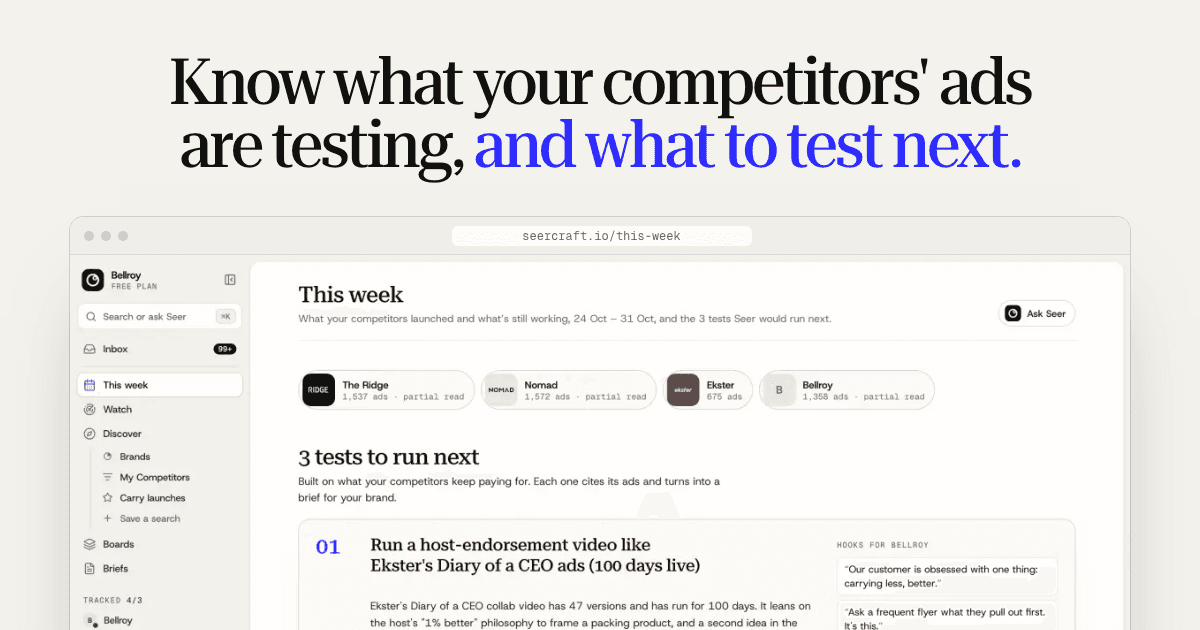
Seercraft is built around the public Meta Ad Library. Discover searches it and sorts results by how long ads have run. For brands you follow, Seercraft tracks them daily and keeps history after ads stop, so seasonal ads like these stay available to study next year. Seer summarizes a brand's ads, and every claim links to the ads behind it.
We don't show spend, and nobody else can show it for commercial ads either. For the rest of the series, read who Friendsgiving ads are really selling to, why Friendsgiving ads start late and the guest's other question: what to wear.
Sources
- Meta Ad Library: active US ads containing the exact phrase "Friendsgiving" (search run 17 Nov 2026)
- Meta Ad Library: active US ads containing the exact phrase "Thanksgiving" (search run 17 Nov 2026)
- Meta Ad Library: wild.hearts.home with The Home Depot, Library ID 4097572580548766
- Meta Ad Library: Weekly Home Check with The Home Depot, Library ID 1066990039713545
- Meta Ad Library: Jasmine Monroe with The Home Depot, Library ID 5492919140932340
- Meta Ad Library: Yianna Bouikidis with TRUFF, Library ID 1029098566879703
- Meta Ad Library: Reece Weaver with Harry & David, Library ID 1417580316785756
- Meta Ad Library: Reece Weaver with 1-800-Flowers.com, Library ID 1674603894056762
Add a competitor and start your free trial to see which of their ads have run longest. Every subscription includes a 7-day free trial; see our pricing page for current plans and limits.